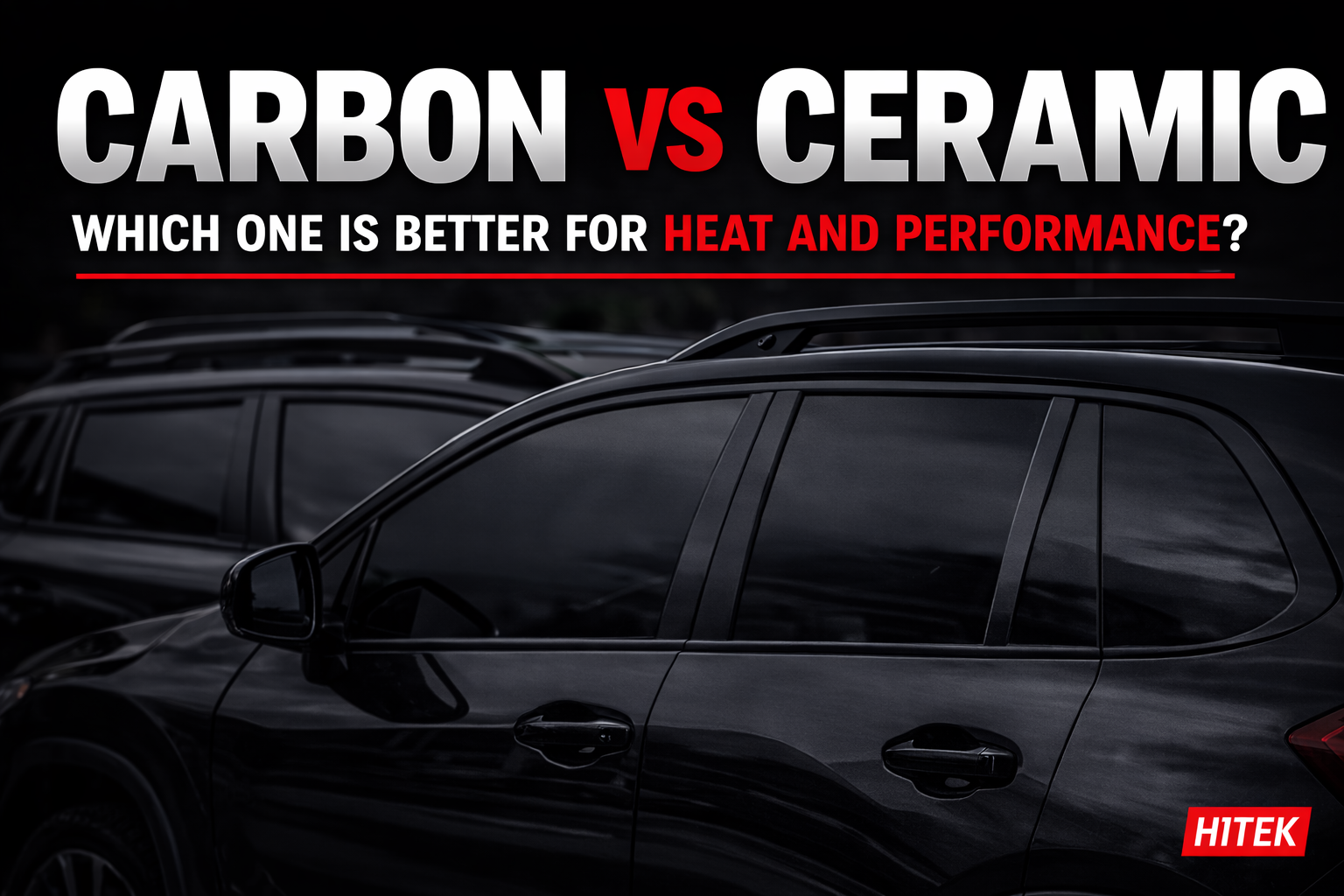
Carbon vs Ceramic Window Tint: Key Differences in Heat Rejection and Performance When drivers upgrade their vehicle’s window tint, two of the most common options they compare are carbon and ceramic films. Both are considered high performance upgrades compared to basic dyed tint, but they are built using different materials and technologies. Understanding how these films work can help drivers choose the right tint for their needs, whether the goal is stronger heat rejection, long term durability, or improved driving comfort. Carbon Window Tint Explained Carbon window tint is produced using carbon based particles embedded throughout the film. These particles help absorb infrared heat while maintaining a dark, consistent color across the glass. Because carbon tint does not rely on dye to create its color, it holds its appearance much longer than traditional dyed films. The tint maintains a rich black finish without fading or developing the purple discoloration that can occur with lower quality films. Carbon tint also has a non reflective surface, giving it a matte black appearance that many drivers prefer for both style and privacy. Understanding Ceramic Window Tint Ceramic window tint uses advanced nano ceramic particles to filter sunlight. These microscopic ceramic particles are designed to block infrared heat and ultraviolet radiation while maintaining high clarity through the glass. Unlike carbon tint, ceramic film does not rely primarily on absorption. Instead, it reflects and blocks a larger portion of solar energy before it enters the vehicle. This technology allows ceramic tint to reduce interior heat significantly without requiring extremely dark shades. Heat Reduction Comparison One of the main reasons drivers compare carbon and ceramic tint is heat performance. Carbon tint can reduce a moderate amount of infrared heat entering the vehicle. Many carbon films provide infrared rejection in the range of roughly 40 percent to 60 percent. Ceramic tint is designed for stronger thermal performance. High quality ceramic films can block between 80 percent and 98 percent of infrared radiation depending on the product. This difference can noticeably affect interior temperatures during hot summer months. Visibility and Clarity Carbon tint creates a darker appearance on the glass, which many drivers prefer for privacy and aesthetics. Ceramic tint often appears slightly lighter but offers superior clarity from inside the vehicle. Drivers often notice improved visibility at night compared to darker films. Because ceramic films block heat without relying on darkness, they can maintain comfort while preserving visibility. Durability and Longevity Both carbon and ceramic films are designed to last much longer than basic dyed tint. Carbon tint maintains color stability and resists fading over time because it does not rely on dye pigments. Ceramic tint also resists fading and discoloration. The nano ceramic particles used in the film remain stable even after years of sun exposure. Both options offer strong long term durability when installed properly. Carbon vs Ceramic Window Tint: Quick Comparison Heat rejection Carbon tint offers moderate infrared heat reduction. Ceramic tint provides significantly stronger heat blocking. Appearance Carbon tint creates a darker matte black look. Ceramic tint often appears lighter but maintains high clarity. Signal compatibility Both carbon and ceramic films are non metallic and do not interfere with GPS or cellular signals. Durability Both films resist fading and maintain their appearance over many years. Choosing Between Carbon and Ceramic Tint Drivers who want better performance than dyed tint but still want a moderate price point often choose carbon window tint. Drivers looking for the highest heat rejection and maximum interior comfort typically choose ceramic window tint. Both films provide strong upgrades, but ceramic tint generally delivers the best overall performance. FAQs Is ceramic tint better than carbon tint? Ceramic tint generally provides higher heat rejection than carbon tint because it is designed to block a larger portion of infrared radiation. Does carbon tint still reduce heat? Yes. Carbon tint reduces infrared heat more effectively than dyed tint, though it does not match the heat blocking performance of ceramic films. Will ceramic tint affect GPS or phone signals? No. Ceramic window tint is non metallic and does not interfere with GPS, mobile phones, or radio reception. Is ceramic tint worth the extra cost? Many drivers choose ceramic tint because it provides stronger heat reduction, improved comfort, and long term performance.
How Long Does Window Tint Last in Fremont, CA? Guide If you’re asking how long does window tint last in Fremont CA, you’re likely weighing performance against longevity in a region defined by intense Silicon Valley sun and cool, foggy evenings from the Bay. In Fremont, window tint lifespan is not only about appearance. For the area’s large EV and Tesla population, it also affects cabin temperature stability and day-to-day energy use. This guide explains realistic tint lifespans in Fremont, how local climate conditions influence durability, and what to expect from different window film materials over time. Average Lifespan: What Fremont Drivers Should Expect How long does window tint last in Fremont CA depends primarily on film construction, exposure patterns, and long-term environmental stress. Vehicles parked outdoors along I-880, I-680, or large retail areas like Pacific Commons typically experience more heat and UV load than garaged vehicles. In general terms, Fremont drivers can expect the following ranges: Dyed film: often lasts several years before fading or color shift becomes noticeable, depending on manufacturer quality and sun exposure Carbon film: commonly lasts longer, maintaining a more consistent appearance with improved heat control Ceramic film: typically delivers the longest lifespan, frequently lasting well over a decade when properly installed and maintained Bay Area window tint durability is shaped by consistent sun exposure combined with mild but humid winters. Higher-quality films designed for infrared and UV control maintain color stability and performance far longer than entry-level options. Why Material Choice Matters More for Fremont EV Owners Fremont has one of the highest EV ownership rates in the country. For these vehicles, window tint longevity is closely tied to thermal efficiency rather than aesthetics alone. Heat Rejection and EV Battery Range: The Tesla Connection In electric vehicles, interior heat buildup directly increases cooling demand. Over time, frequent high-output air conditioning use contributes to higher energy consumption. Ceramic window tint for Tesla Fremont drivers helps manage this by reducing the amount of solar heat that enters the cabin. High-performance ceramic films work by limiting infrared energy transfer while remaining visually clear. This can result in noticeably lower interior temperatures on hot afternoons, particularly in vehicles with expansive glass areas. While the exact efficiency impact varies by driving habits and conditions, many Fremont EV owners report reduced reliance on aggressive climate control during summer commutes. Why Non-Metallic Films Are Essential for EVs and Tech-Heavy Cars Modern vehicles depend on uninterrupted electronic connectivity, including GPS, Bluetooth, mobile data, and keyless systems. Metalized window films can interfere with these signals. Carbon and ceramic films avoid this issue because they contain no metal layers. They provide heat and UV control without affecting onboard technology. Ceramic options, in particular, offer the highest performance while remaining compatible with all vehicle electronics, making them well-suited for Fremont’s tech-focused drivers. Local Stressors: How Fremont’s Climate Affects Your Tint Fremont CA sun protection for cars must account for sharp temperature changes within a single day. Vehicles often transition from hot, dry afternoon conditions to cool, damp evenings as fog rolls inland. Thermal Cycling: From I-880 Heat to Bay Area Fog Thermal cycling places gradual stress on window film and adhesive layers. Glass and film expand and contract at different rates, which can affect edges and defroster lines over time. Humidity effects on window tint CA conditions also influence curing. In warmer, dry months, film may settle faster, while installations during foggy or damp periods can require additional curing time before full adhesion occurs. High-quality films are made to tolerate these cycles. Precision-cut installations that follow the exact shape of the glass further reduce long-term edge stress. UV Exposure: Protecting Your Interior from the Santa Clara Valley Sun Even with moderate coastal temperatures, Fremont experiences strong UV exposure. Over time, untreated glass allows UV to fade interior surfaces and accelerate material aging. Automotive window films are designed to block nearly all UV radiation, helping preserve interior materials and slow visible wear. This protection becomes increasingly important for vehicles intended for long-term ownership. Staying Legal in Fremont California enforces strict front-window tint standards. Rather than focusing on darkness, many Fremont drivers choose light, high-performance films that deliver heat rejection while remaining visually subtle. This approach minimizes compliance concerns while still improving comfort and durability. Maintenance: How to Ensure Your Tint Lasts 10+ Years Long-term performance depends as much on care as it does on material selection. Fremont drivers who follow basic maintenance practices typically see significantly longer tint lifespan. Ammonia-Free Cleaning: The Golden Rule Ammonia-based cleaners can degrade window film over time. Using ammonia-free solutions and soft microfiber towels helps protect both the surface coating and adhesive layer. Gentle cleaning methods reduce the risk of haze or premature wear. Protecting Your Window Seals from Abrasive Road Grime Road dust and fine debris collect in window channels and seals. When windows are lowered, this grit can scratch film edges. Periodically wiping the top edge of the glass and cleaning rubber seals with a soft cloth reduces abrasion and helps maintain a clean, even appearance. FAQs Is 35% tint legal on front windows in Fremont? No. California requires front side windows to allow at least 70% visible light transmission. How long does ceramic tint last compared to standard film in CA? Ceramic films generally last significantly longer than dyed films, often exceeding a decade with proper care. Can I roll my windows down after tinting in the Bay Area climate? Waiting several days allows the adhesive to cure fully, especially during cooler or more humid periods. Do window tint laws differ for EVs? No. EVs must follow the same California tint regulations as other passenger vehicles.